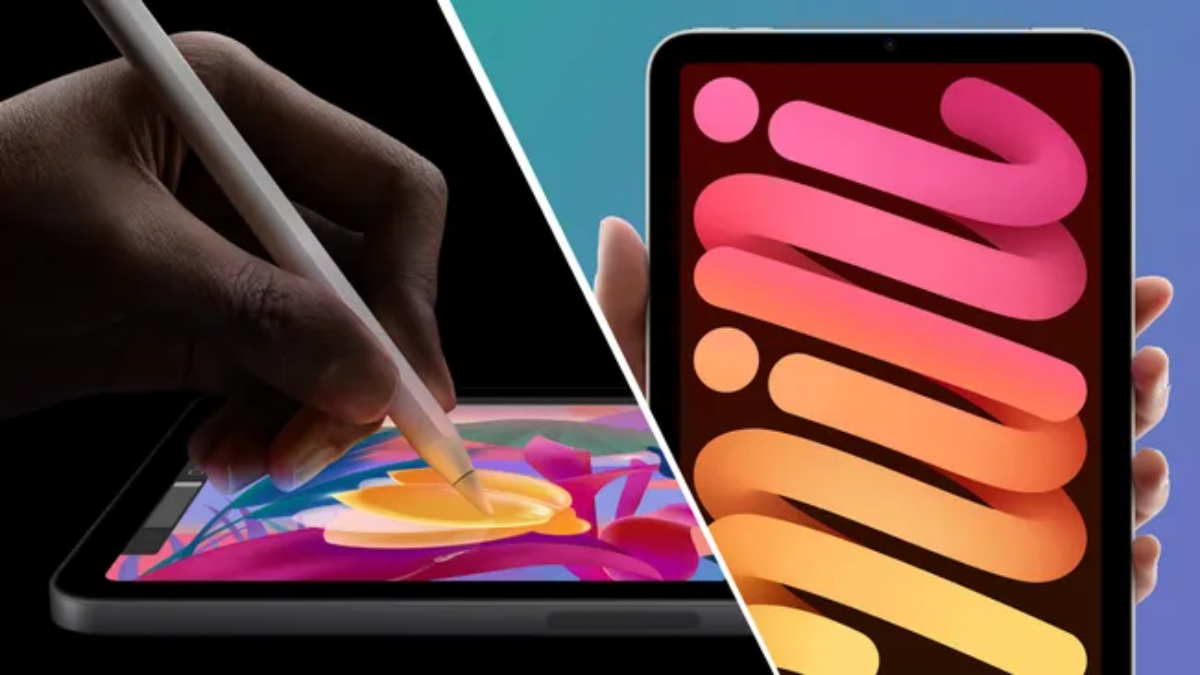
Now that the excitement has settled from Apple’s unexpected announcement of the iPad mini 7, many eager shoppers are diving into the tablet’s specifications, and not everything they’re finding is encouraging.
Sure, the iPad mini 7 is a solid improvement over the 8.3-inch model that came out three years ago—something worth celebrating. However, there are a few areas where it feels like a bit of a letdown, suggesting that Apple hasn’t fully committed to making a small tablet that can compete with its larger counterparts, the iPad Air and iPad Pro, both of which are 13 inches.
So, what are the specific shortcomings of the iPad mini 7, and should they even matter to you? Here are the main points of concern based on what many were hoping for when rumors started swirling earlier this year.
1. A Downgraded A17 Pro Chip
The iPad mini 7 packs the A17 Pro chip, making it more powerful than the 2021 model. This chip allows it to support Apple’s AI features, making it the most affordable way to access these new capabilities. However, a closer look reveals that this A17 Pro isn’t quite the same as the one in last year’s iPhone 15 Pro models; it has a 5-core GPU instead of the 6-core found in those flagship phones.
This isn’t a unique situation—earlier this year, when the M2 iPad Air was released, it was later revealed that it had a 9-core GPU instead of the originally advertised 10-core. Most users probably won’t notice much of a difference in performance, but many are disappointed that the iPad mini 7 didn’t come with the latest A18 or A18 Pro chip, which would have made it more future-proof. Though that could have raised the price, so it’s a trade-off.
2. A 60Hz Screen Without ProMotion
Some earlier leaks hinted that the iPad mini 7 would feature a 120Hz display, so many were a bit let down to find it still has a 60Hz screen. This refresh rate indicates how many times the display updates each second—a higher number means smoother scrolling. Apple calls its 120Hz technology “ProMotion.”
However, it’s worth noting that the base models of the iPhone 16 and iPad Air M2 also have 60Hz screens, so this isn’t a dealbreaker. What could be a bigger concern is whether Apple has addressed the ‘jelly scrolling’ issue that some users experienced with the previous iPad mini model when scrolling in portrait mode. Apple had previously stated that this was typical behavior for LCD screens, so it’ll be interesting to see how the new mini performs.
3. Touch ID Instead of Face ID
While Face ID seems to be fading away on iPhones, the iPad mini 7 continues to rely on Touch ID for features like Apple Pay and app logins. Its design is nearly identical to the previous model, aside from a few new color options. Many had hoped the mini 7 would adopt Face ID like the latest iPad Pro models, but sticking with Touch ID may be seen as a more traditional choice. Some users might prefer this, as Face ID hasn’t always performed as well on iPads compared to iPhones.
4. No Physical Nano-SIM Slot
For those who want cellular connectivity, the iPad mini 7, like the latest iPad Air and Pro models, doesn’t come with a physical SIM card slot. Instead, it uses eSIM technology. For many users, this isn’t a huge problem, as setting up eSIMs can be quick and straightforward. However, if you frequently swap SIM cards between devices, you might find this limiting, as it typically requires contacting your carrier, which can often be a hassle.
5. No Charger Included (In the EU)
Another potential downside, particularly for European buyers, is that the iPad mini 7 doesn’t come with a charging brick in the box. This isn’t surprising, as Apple has been phasing out included chargers with its recent models in response to new EU regulations aimed at reducing electronic waste. On the bright side, the included USB-C charging cable is now braided, making it more durable. If you’re in the US or Australia, you’ll still get the standard 20W USB-C charger.
iPad mini 7 – Early Thoughts
Most people looking to buy the iPad mini 7 likely won’t see these details as major drawbacks. While it would have been great to see an A18 chip and a ProMotion display, that would likely push the price beyond its reasonable starting point of $499 / £499 / AU$799 for the 128GB model.
In essence, Apple hasn’t gone all out on creating a premium mini tablet, but it has likely done enough to satisfy fans of this size—mainly by equipping it with a chip that supports Apple’s AI features, doubling its RAM and base storage, and adding support for the Apple Pencil Pro. The tablet also includes other small improvements, like a faster USB-C port and Wi-Fi 6E. Overall, the iPad mini 7 seems like a solid option for creatives who enjoy digital drawing or photo editing while on the go. We’ll share our complete thoughts once we’ve had a chance to test it thoroughly.