After a harsh and disheartening election outcome, many Americans are feeling shaken and unsure about the future. This sense of despair is hitting certain groups especially hard—Black voters, women, individuals with disabilities, members of the LGBTQIA+ community, and young voters are grappling with feelings of profound disappointment following Donald Trump’s second presidential victory. For many, it feels isolating and overwhelming.
In this sea of uncertainty, social media has become a lifeline for many. Videos, messages, and heartfelt posts are flooding platforms, as people seek solace and solidarity in their shared struggles. However, while these displays of support feel meaningful now, history suggests that much of it might fade as the immediate shock wears off. Sadly, fleeting performative gestures often give way to a return to business as usual.
This election revealed deep divides. While a significant number of white voters turned out for the Harris/Walz campaign, even more chose to back a figure mired in controversy and convicted of serious crimes. For marginalized groups—especially Black and LGBTQIA+ individuals—the aftermath of this election feels like a betrayal. Trust in their fellow citizens is crumbling, leaving them unsure of who they can rely on or turn to for support.
As the nation wrestles with these challenges, a new social movement has emerged, offering a way to identify allies and rebuild a sense of safety.
The Blue Bracelet Movement: A Symbol of Solidarity
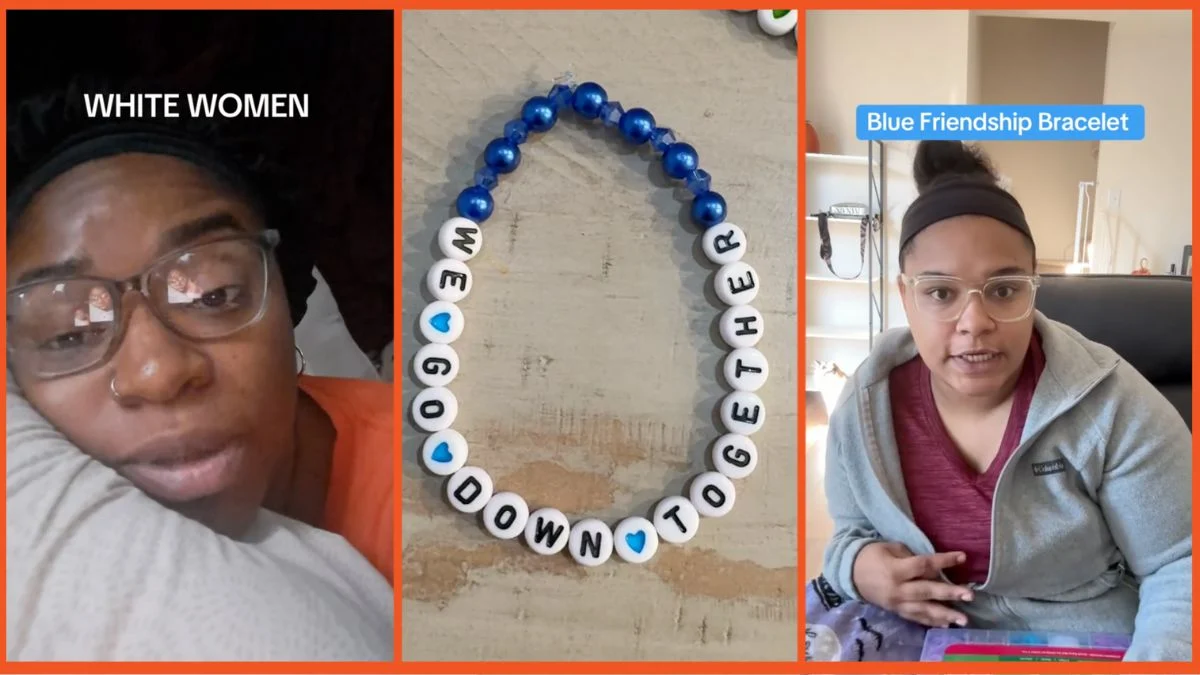
In the wake of Trump’s 2024 win, a grassroots trend quickly gained traction on social media. Dubbed the “blue bracelet movement” or the “blue friendship bracelet movement,” this initiative aims to create a visible sign of unity among Democratic voters. The idea is simple but powerful: wearing a blue bracelet signals to others that you’re an ally—a safe, supportive presence amid a politically tense landscape.
Participating is easy. Whether you buy a bracelet or craft one yourself using blue beads and stretchy cord, the goal is to wear it proudly on your wrist, where others can spot it. For those feeling lost or isolated, this simple symbol provides reassurance: You are not alone.
A Movement with Risks and Rewards
Like any symbol, the blue bracelet has both strengths and vulnerabilities. The show of solidarity is inspiring and offers hope to many. It’s a way to visibly affirm shared values, support for human rights, and commitment to fighting for a better future.
However, as history has shown, symbols of resistance can also carry risks. In regimes that have turned toward authoritarianism, such outward markers have been exploited by bad actors. People wearing such symbols may unwittingly attract those seeking to infiltrate or harm their communities. Some caution that, in darker scenarios, these bracelets could go from being a badge of belonging to a potential target.
A Reminder of Shared Strength
For now, the blue bracelet stands as a powerful reminder: there are millions of others who share your vision of equality, justice, and compassion. It’s a small but meaningful way to reclaim a sense of community in a fractured nation.
While the road ahead may seem uncertain, movements like this highlight the resilience of the human spirit. As the country navigates its next chapter, the blue bracelet serves as a beacon of hope—proof that no matter how divided things may feel, there are countless people willing to stand together and fight for what’s right.
 Last updated