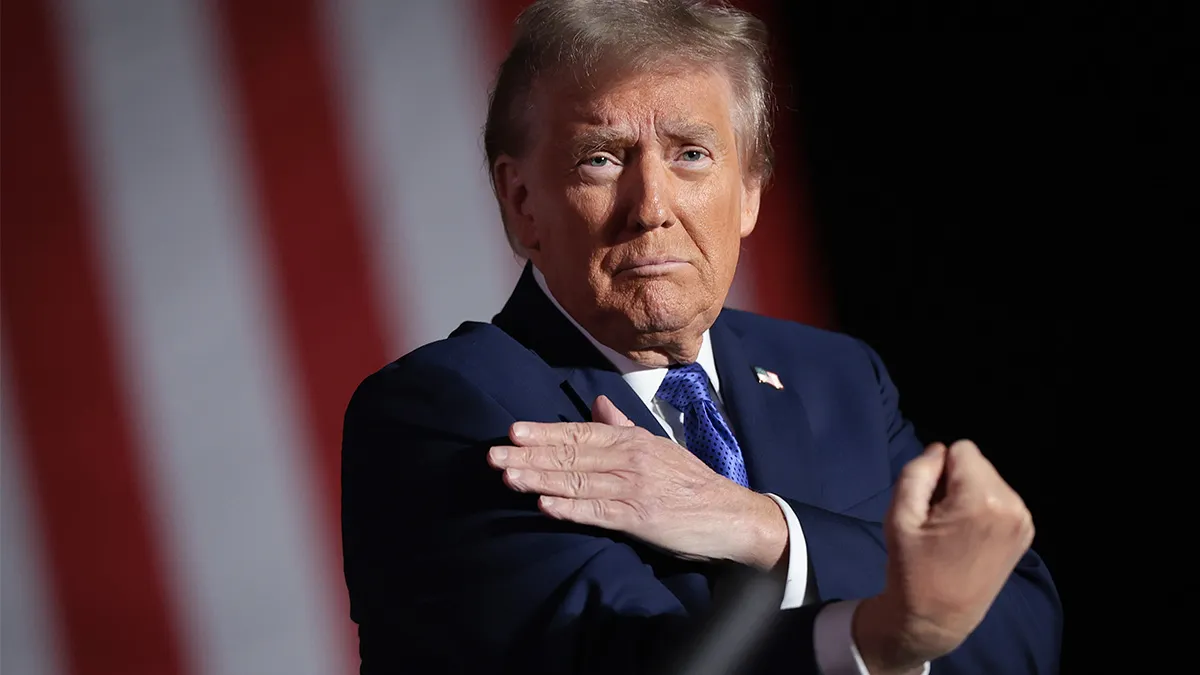
As the 2024 election draws near, both parties are racing to engage the American electorate, with Kamala Harris diligently participating in interviews and rallies, even with networks that may not be sympathetic to her agenda. In contrast, Donald Trump’s campaign strategy seems to lean more towards spectacle than substance, leading to a series of eyebrow-raising moments.
Rather than focusing on policy discussions, Trump appears to favor light-hearted public appearances, including a recent photo op at McDonald’s and an array of quirky comments during his speeches. His behavior has raised concerns about his mental state, especially as he seems to sidestep crucial discussions in favor of whimsical or controversial remarks. During a town hall event in Pennsylvania, he struggled to articulate a coherent message regarding cognitive issues, stating, “I have no cognitive… There’s no cognitive problem,” which inadvertently highlighted his own cognitive challenges.
His insistence on claiming he’s “not that close to 80” at 78 years old was another peculiar moment, likening his rhetoric to someone downplaying their age rather than addressing serious concerns about fitness for office.
Trump’s age has come under scrutiny, especially following his public pressure on Joe Biden regarding age and mental acuity. Critics have pointed out that his recent rallies have shown signs of decline, with moments where he seemed disengaged, opting to dance instead of interact with constituents. His choice to sit on a padded cushion rather than stand during a Pennsylvania event has led to claims of “exhaustion” from his detractors, further fueling discussions about his suitability for another presidential term.
Harris’ campaign has seized on these moments, with a spokesperson emphasizing the need for a president who can focus on the nation’s needs rather than appearing “too exhausted” to engage meaningfully.
Trump’s speeches have historically been filled with inaccuracies, but his recent gaffes and incoherent statements are raising alarms even among some of his loyal base. While his supporters may remain steadfast, many average Americans are observing his verbal missteps and questioning his capacity to govern effectively. As the campaign progresses, the contrast between Harris’s strategic approach and Trump’s erratic style may shape voter perceptions and ultimately influence the election outcome.
With the election fast approaching, the question remains: can Trump regain the confidence of undecided voters, or will his apparent cognitive decline alienate them further? The American electorate is watching closely, and the stakes have never been higher.
 Last updated