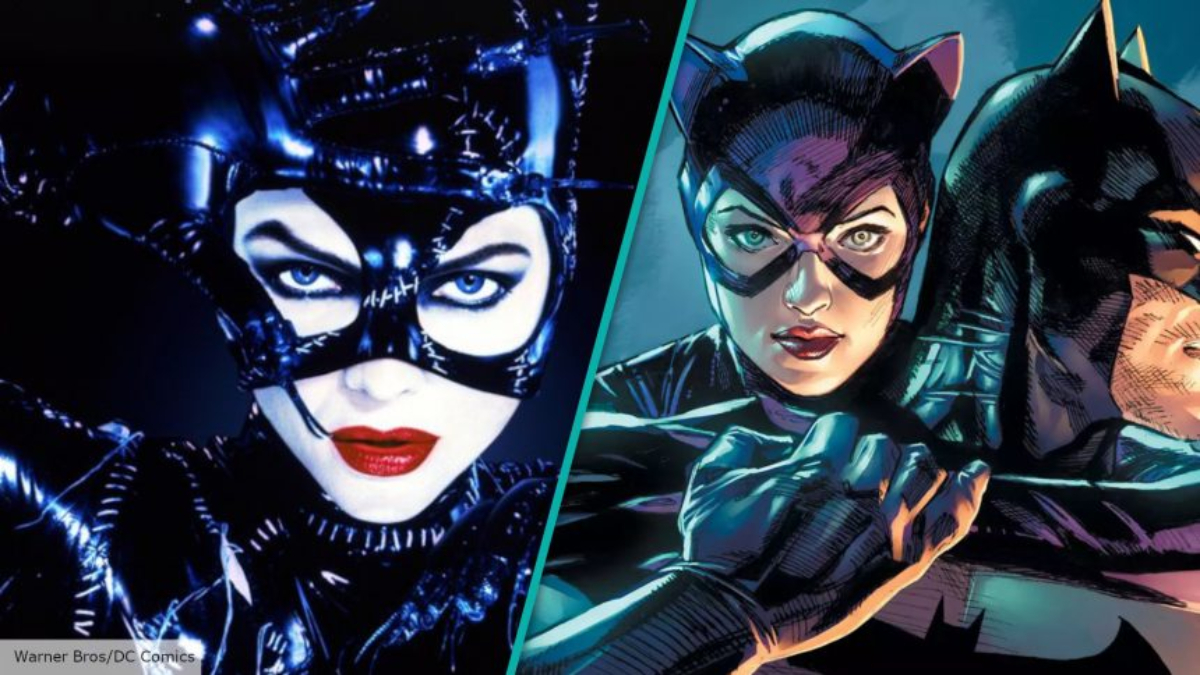
Gotham’s resident femme fatale, Catwoman, has long stood as one of the most beloved Batman villains ever created. However, despite the multitude of actors who have portrayed this complex feline fiend, one latex-clad star stands above the rest. In 1992, the action movie Batman Returns hit theaters, and subsequently, Michelle Pfeiffer cemented her place in history as the best Catwoman to ever grace the big screen.
Saying that Michelle Pfeiffer is the supreme Catwoman isn’t exactly a surprising take. The star is often at the top of every DC fan’s list when you ask the big “best of” question. Even Michael Keaton, who played opposite her in the ’90s movie as Batman, can’t help but sing her praises. Yet, considering that eight other actors have played the role across TV and film, and four of those performances came after Pfeiffer’s appearance as Gotham’s seductive bad girl, you have to ask yourself: how has she managed to hold onto her Catwoman crown?
What Makes Pfeiffer’s Performance So Memorable?
Pfeiffer’s portrayal remains iconic even 30 years after it hit the silver screen. Catwoman, also known as Selina Kyle, made her debut in the DC comics back in 1940 in Batman issue #1 (the same issue that introduced the Joker). Over her 75-plus years in the franchise, Catwoman has undergone numerous variations and backstories, often featuring a rough childhood filled with abusive fathers, parental suicide, or traumatic experiences in correctional facilities.
However, Michelle Pfeiffer’s Catwoman diverges from this typical narrative. In Batman Returns, she plays Selina Kyle, an “executive assistant” to the evil businessman Max Shreck. After discovering his corrupt plans to steal Gotham’s power supply, Shreck decides to throw Selina out of a window. Instead of dying, she’s resurrected by a group of stray cats, leading to one of the most iconic origin stories in superhero cinema.
A Powerful Transformation
In the film, there are no childhood flashbacks or rushed monologues filled with exposition. Instead, we witness the now-resurrected Selina returning to her small apartment in a daze. As she steps inside, all her repressed emotions from being murdered by her misogynistic boss erupt in a chaotic display of primal emotion. She wrecks her home, punching walls and breaking glass, all while screaming and crying manically. During this outburst, she begins to stitch an old black trench coat into her now-famous patchwork catsuit, officially birthing Catwoman.
This scene is visually striking and serves as a powerful moment, encapsulating how relatable and real Pfeiffer’s Catwoman truly is. Unlike many iterations of the character, such as Zoe Kravitz’s in The Batman, which delve into a troubled past, Pfeiffer’s version emphasizes that the weight of societal oppression and urban loneliness can be enough to forge Catwoman’s identity.
In Batman Returns, Selina isn’t from a broken home and seemingly hasn’t suffered extreme abuse in her formative years. Instead, she starts as an ordinary woman navigating the big city. She endures constant calls from her overbearing mother, workplace misogyny, and heartbreak from her boyfriend, who breaks up with her via her answering machine. This portrayal allows audiences to relate to her more easily, making her character memorable and impactful.
A Reflection of Real Struggles
Pfeiffer’s Catwoman symbolizes the trials and tribulations that many women face, albeit minus the resurrection by cats. Her chaotic actions and criminal pursuits stem from mistreatment and the desire for revenge, making her journey cathartic to witness. As she vows revenge on Max Shreck, it’s hard not to root for her as she seeks to reclaim her power. Her iconic declaration, “I am Catwoman, hear me roar,” embodies her transformation and strength.
Beyond the character’s subtext, Pfeiffer’s charisma and dynamism shine through. Her confidence, combined with memorable one-liners, makes her performance unforgettable. Who can forget her flirtatious encounter with Batman under the mistletoe or the moment she mockingly counts down her nine lives while taunting Max during a climactic fight scene?
As Michael Keaton aptly noted, she successfully blended elements of sexiness, irony, tragedy, danger, and overall appeal, making her Catwoman not just a character, but a captivating presence on screen.
While many variations of Selina Kyle exist, Pfeiffer’s portrayal resonates differently. She represents a normal person facing extreme stress, grappling with her new identity. Although she is fixated on revenge, her struggle to come to terms with her transformation draws viewers in.
In many ways, Pfeiffer steals the spotlight from Michael Keaton’s Batman, leaving audiences more invested in her arc than in Bruce Wayne’s. Her legacy as Catwoman remains unmatched, a testament to her captivating performance and the character’s enduring appeal in the DC universe.
 Last updated