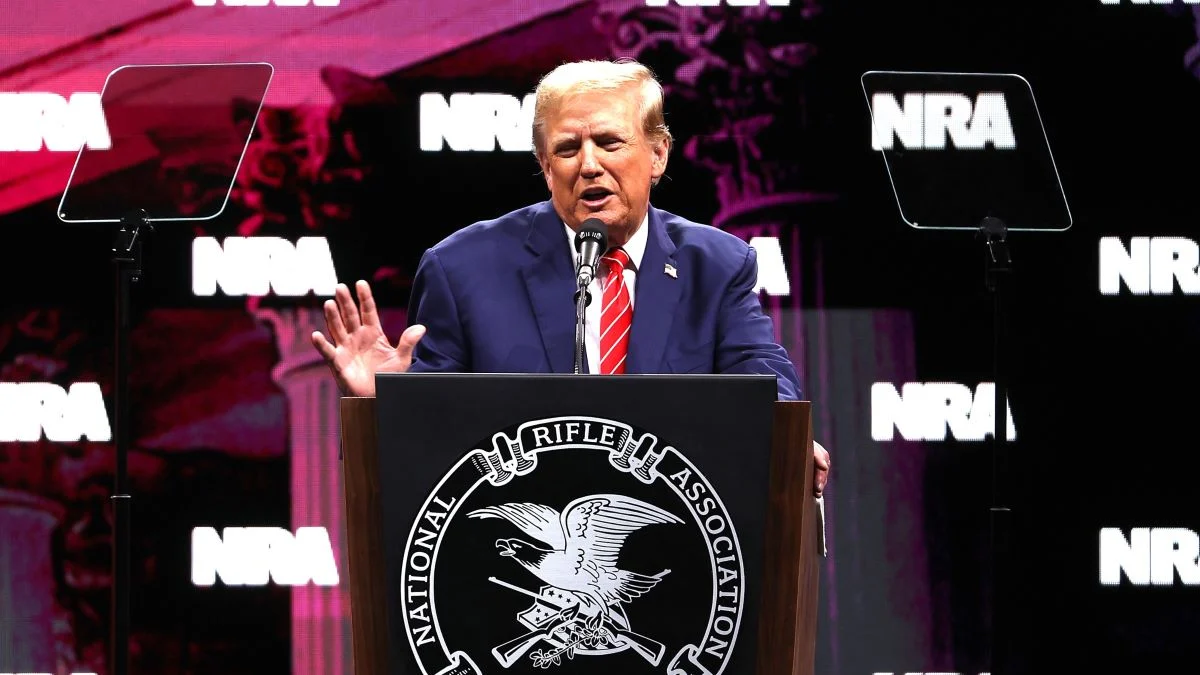
The United States is well-known for three main things: Hollywood, junk food, and unfortunately, mass shootings. It’s become a common trend for one side of the political spectrum to find fault with everything but the actual firearms used in these tragic events.
The Video Game Blame Game
One of the usual scapegoats for gun violence is video games. As someone who grew up playing video games, I find this argument puzzling. I’ve played my fair share of games and, thankfully, have never harmed anyone. Often, those who blame video games for violent behavior are older individuals with little to no gaming experience, trying to divert attention from the real issue: guns and the lack of effective gun control.
When he was president, Donald Trump was among the Republicans quick to point fingers at video games for gun violence. Following the mass shootings in Ohio and Texas in 2019, Trump urged the need to “stop the glorification of violence.” Ironically, that message rings hollow today, especially considering he recently suggested using the military against what he calls “the enemy from within,” labeling them “radical left lunatics.”
A Mixed Message
In his August 2019 speech, Trump did make some valid points, such as the need to condemn racism, bigotry, and white supremacy, stating, “Hate has no place in America.” While these sentiments are commendable, it’s hard to shake the feeling that he was just reading from a teleprompter, without genuine conviction.
It’s essential to remember this speech was delivered years before the January 6th insurrection. Trump has frequently used inflammatory rhetoric, sometimes spreading falsehoods to incite fear and hatred. For example, he claimed that Haitian migrants were eating people’s pets, a bizarre statement that does nothing but stoke unnecessary panic.
Even though Trump acknowledged mental health as a contributing factor to violence, he carefully sidestepped upsetting his Second Amendment supporters. The previous year, he had mentioned hearing more and more people asserting that video game violence influences young minds.
The Evidence Doesn’t Support the Claims
Many experts have pointed out the flaws in Trump’s reasoning. Research shows that while there is a slight correlation between video games and violence, it’s minimal. Psychologist Jonathan Haidt notes in his book, The Anxious Generation, that video games in moderation are generally harmless for most kids. However, around 7% of children and adolescents might develop a true addiction or exhibit problematic usage, which could interfere with other aspects of their lives.
During a vice-presidential debate, JD Vance suggested enhancing security at schools to combat shootings. In response, Tim Walz pointed to Finland, where, despite high firearm ownership, school shootings are rare.
Learning from Others
Walz’s comments invite a crucial question: What can Americans learn from other countries? It may be time for some in the U.S. to look beyond their borders and consider what nations like Finland are doing right that America is not. This examination could be key to addressing the pervasive issue of gun violence in the U.S. If we truly want to reduce these tragic incidents, it’s vital to confront the real problems rather than shift blame elsewhere.
 Last updated