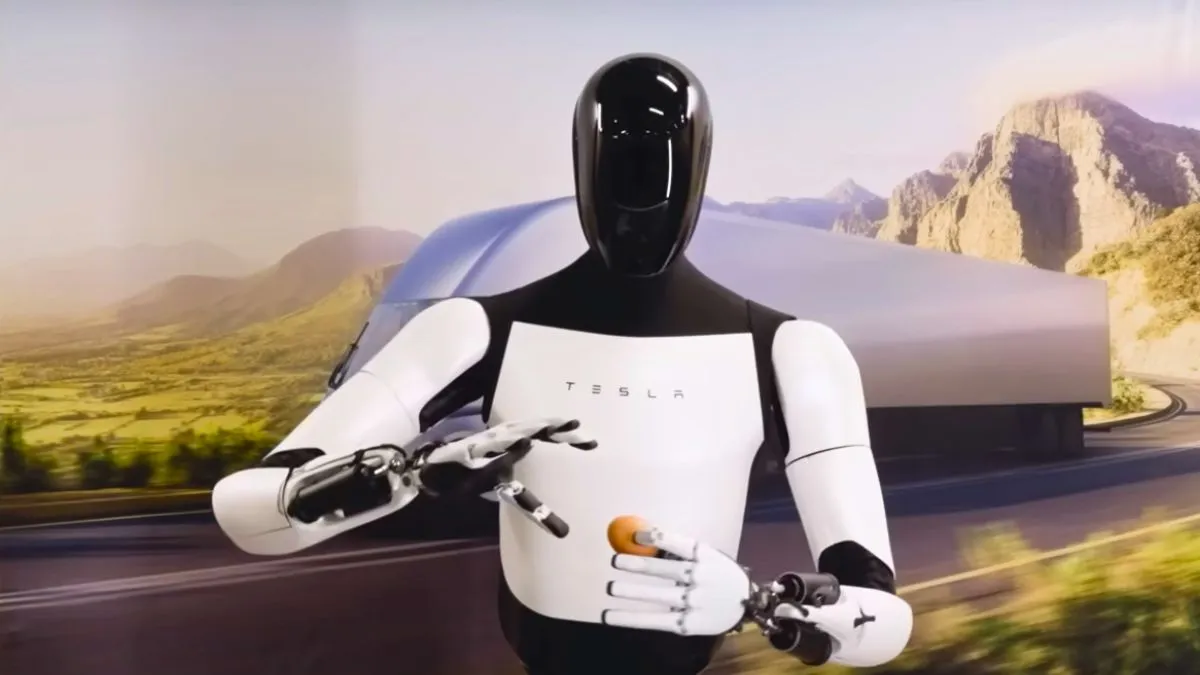
On October 10, 2024, Elon Musk unveiled the latest version of Tesla’s Optimus robot in Los Angeles, California, showcasing a nearly six-foot-tall model that some found reminiscent of the 2004 sci-fi film I, Robot. During the live event, humorously dubbed We, Robot, Musk claimed, “It can basically do anything you want,” despite its somewhat unsettling, void-like face that triggers a primal fight-or-flight response.
What Can the Optimus Robot Do?
Tesla markets Optimus as a versatile companion capable of various tasks—think babysitter, cleaner, and friend. While its design echoes the robots from I, Robot, Musk humorously referred to Optimus as “your personal R2D2.” However, it’s worth noting that the charm of Star Wars droids lies in their personalities and souls, a quality not inherently present in Optimus.
Optimus can engage in simple conversations, such as singing “Happy Birthday,” and videos showcase its dexterity in performing tasks like making drinks and cracking eggs. Its main purpose is to simplify users’ lives, providing assistance in the kitchen or companionship for children while they color. With these upgrades, Tesla aims to offer a safe and enjoyable experience, allowing customers more time with their family and friends.
The robot revealed at the event is the third generation of Optimus, following Gen 2, which was showcased in December 2023. Gen 2 featured enhancements such as Tesla-designed actuators and sensors, improved dexterity, faster walking, a lighter build, and an articulated neck. While Gen 2 was notable for its hardware improvements, the marketing for Optimus has shifted to capitalize on the growing interest in AI and its potential integration into daily life.
Musk elaborated on Optimus’s capabilities, stating it could “be a teacher, babysit your kids, walk your dog, mow your lawn, get the groceries, just be your friend, serve drinks.” This broad array of functions raises intriguing questions about the ethical implications of such advanced robotics.
Musk’s bold claims about Optimus being able to do “anything” evoke memories of other media exploring the moral dilemmas surrounding advanced AI. Films like I, Robot, Blade Runner, and video games like Detroit: Become Human have warned against the potential dangers of treating artificial beings as tools or servants. The latter game, in particular, emphasizes the exploitation of synthetic beings, while Humans tackles the darker aspects of human interactions with robots.
While current technology is far from these fictional scenarios, the rapid advancements in AI have many questioning how soon we might face similar dilemmas.
Tesla plans to start selling Optimus in 2026, with a price tag estimated between $20,000 and $30,000 once production scales up. For those with a few extra tens of thousands of dollars to spend, acquiring an Optimus might be worth considering—though one might also ponder how many sleepless nights might come from imagining it creeping around the house after a night out with its robotic peers.
 Last updated