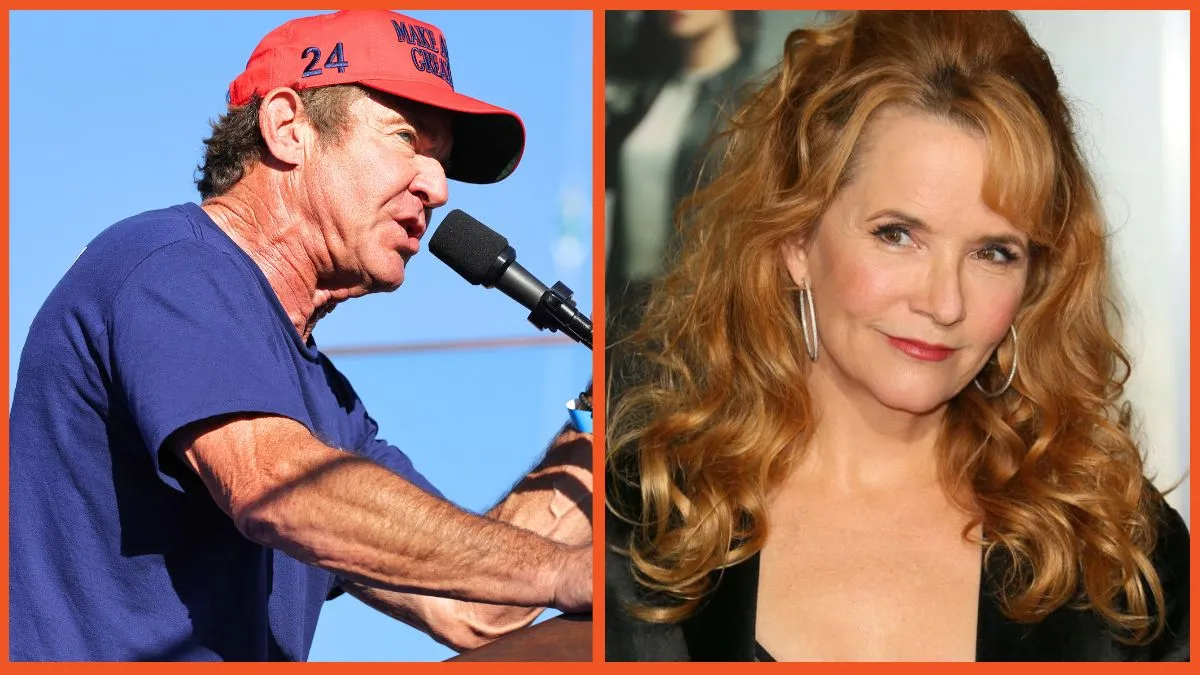
Dennis Quaid is making headlines again, but this time it’s not for his acting chops—it’s for his bold political stance. At a recent rally in Coachella, California, Quaid declared his support for conservative values, urging the audience to “pick a side” in a series of rhetorical questions that pitted American values against modern societal issues. He asked whether the nation would prioritize the Constitution or “TikTok,” and whether it would uphold law and order or allow for “wide open borders.”
But while Quaid seems keen to rally for the Republican cause, his comments raise some eyebrows. For instance, are we really going to dismantle the Department of Education, as some Republicans, including Trump, have suggested? Are we comfortable with a justice system that could be manipulated by the presidency for personal gain? Quaid’s nostalgic comparison of today’s political climate to the 1980s feels like a selective memory, conveniently glossing over major issues such as the pandemic and the January 6th insurrection.
Interestingly, his ex-fiancée, Lea Thompson, didn’t seem to share his enthusiasm for his political pivot. After seeing a clip of Quaid’s speech, she responded with a confused emoji and the remark, “I was engaged to him.” Thompson has previously praised Quaid for guiding her through her early Hollywood career, making her disillusionment all the more poignant. Many on social media echoed her sentiment, congratulating her for moving on from Quaid at the right time.
Quaid’s recent turn towards far-right politics isn’t entirely surprising. Many actors have used their platforms to voice political opinions, though Quaid’s shift feels particularly stark given his past roles as charming, affable characters. While he has had a successful career in films like Breaking Away and The Parent Trap, one wonders if endorsing a twice-impeached ex-president is the best way to leverage that fame.
Of course, Quaid is entitled to his political beliefs, just as the public is free to express skepticism toward a millionaire actor positioning himself as a political expert. In a climate where celebrity opinions often influence public discourse, it’s essential to question the motivations behind these endorsements—especially when they seem to fly in the face of democratic principles. Whether Quaid’s newfound political voice will resonate or alienate his audience remains to be seen, but one thing is clear: his comments have sparked a conversation about the role of celebrities in political discourse.
 Last updated