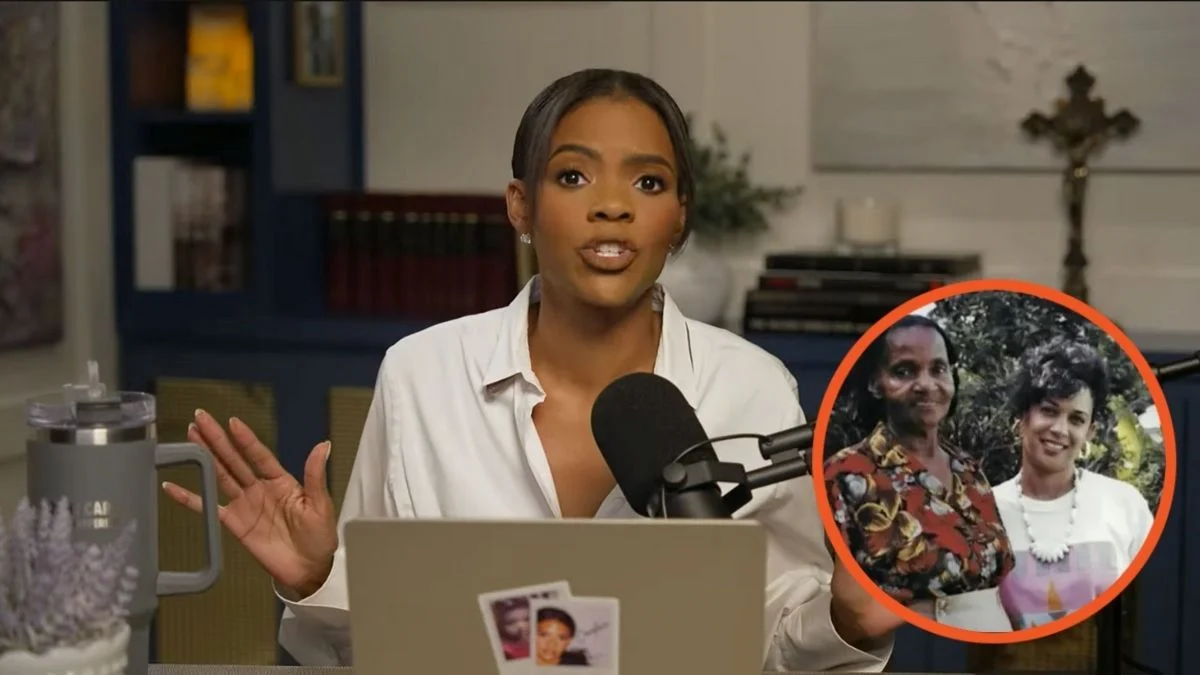
Candace Owens has become a controversial figure, particularly for her criticisms of other Black women, and her recent comments about Vice President Kamala Harris exemplify this tendency. Owens’ attempts to undermine Harris’ heritage have taken on an almost absurd quality, particularly when she claims that Harris’ grandmother is a fabrication. This outlandish assertion highlights Owens’ tendency to engage in self-delusion, as she seems determined to challenge Harris’ identity despite the implications of her own Blackness.
The Delusional Critique
Owens has launched a series of smear campaigns against Harris, and her latest claim—that the Black woman depicted in Harris’ memoir isn’t her actual grandmother—is a striking example of her fixation. On her podcast, she produced dubious “evidence” in the form of footage from an unidentified Jamaican woman who supposedly disputes Harris’ connection to her Jamaican mother, Beryl. This woman’s claims—that the Beryl she knew was white—underscore Owens’ willingness to grasp at straws to validate her narrative. Her desperate need for validation from her audience shines through, revealing a fundamental insecurity in her own identity.
The Irony of Self-Hate
What makes Owens’ critiques particularly ironic is that she is also a Black woman. Her efforts to discredit Harris’ heritage reflect a broader issue of internalized racism, as Owens seems to seek acceptance from predominantly white audiences at the expense of her own community. This pattern isn’t new; she has similarly dismissed the identities of mixed-race individuals, as seen in her comments about Meghan Markle, whom she claimed was “not Black enough” to experience racism. This penchant for questioning the authenticity of others’ identities while disregarding her own is deeply troubling.
A Distorted Perspective
As Harris continues to pursue higher political office, Owens remains ensconced in her role as a provocateur, eager for a semblance of recognition from those who share her views. Despite her success in stirring controversy among conservative circles, her approach is riddled with contradictions. Owens thrives on anti-Black rhetoric while simultaneously undermining the credibility of Black individuals, showing a clear disconnect from her own identity and community.
At the heart of Owens’ commentary lies a distorted view of journalism and accountability. In her relentless pursuit of discrediting Black figures in America, she has veered away from constructive dialogue, choosing instead to perpetuate divisive narratives. However, it seems Owens is aware of her position; her rhetoric often straddles the line between sensationalism and self-preservation, allowing her to remain relevant despite her increasingly ludicrous claims.
Ultimately, Candace Owens embodies a paradox of self-promotion through the erosion of Black identity. Her attempts to discredit Kamala Harris not only reflect her personal insecurities but also a troubling trend in the discourse surrounding race and identity. While Owens may garner attention through her incendiary remarks, the lack of depth and authenticity in her critiques reveals a fundamental misunderstanding of the complexities of heritage and identity in the Black community. As her rhetoric continues to unravel, one can only hope for a return to more meaningful and respectful discussions about race and representation.
 Last updated