If you’re a straight woman—or even if you have single female friends—you’ve probably experienced the challenges of dating. Finding the perfect match, especially with everything else going on in life—work, kids, and managing a home—can feel like a never-ending struggle. The search for a worthy partner is a common frustration, and while some women are simply exhausted by the effort, others have found a bold, growing solution.
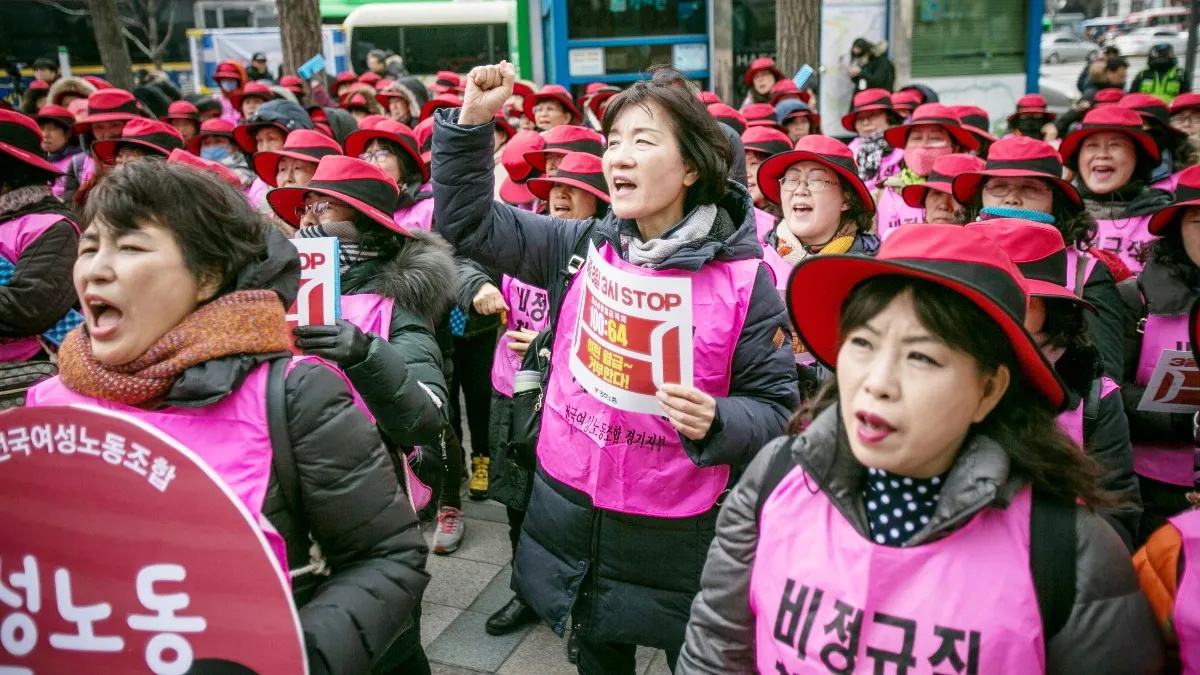
The 4B Movement, which began in South Korea in 2019, has quickly expanded around the world, especially in the wake of political shifts like the 2024 U.S. elections. Women in America, inspired by their South Korean counterparts, are turning to social media platforms like TikTok to raise awareness and promote their call to action globally.
What is the 4B Movement?
The “4B” stands for four main principles that aim to reject traditional gender roles and expectations placed on women:
- Bihon: No heterosexual marriage.
- Bisekseu: No childbirth.
- Biyeonae: No dating men.
- Bisekseu: No heterosexual relationships.
While the original concept focused on rejecting relationships and societal pressures tied to gender, the movement has evolved. In China, for example, it expanded into a more rigorous version called “6B4T,” which also includes rejecting sexist products—like those that come with the “pink tax,” a higher price for items marketed to women despite being essentially the same as men’s versions.
Where Did the 4B Movement Come From?
The roots of the 4B Movement lie in the 2016 novel Kim Jiyoung, Born 1982 by Cho Nam-Joo. The book follows the story of Kim Jiyoung, an ordinary South Korean woman who suffers from psychological breakdowns due to the overwhelming sexism and discrimination she faces in her daily life. This novel helped to expose the deep misogyny, inequality, and frustrations many women experience in South Korea. The book resonated not just with South Korean readers, but with women worldwide who saw their own struggles reflected in Kim Jiyoung’s story.
As of 2024, the 4B Movement remains relatively small in its birthplace of South Korea, but it’s gaining significant traction elsewhere. Unlike traditional feminism, which seeks to challenge and change the patriarchy, the 4B movement advocates for moving away from it entirely—rejecting relationships with men, not as a rebellion, but as a way to build a life outside the system that so often limits women.
South Korea, known for its rigorous beauty standards and a culture that pressures women to conform to very specific expectations, is at the heart of this movement. Women in South Korea face immense pressure to meet these standards, often from a young age. Plastic surgery is common, with some girls receiving it as a graduation gift, and makeup routines can start at age 10. The societal expectation that women’s appearances are their primary value is a labor that many women find exhausting, especially when men are rarely held to the same standards.
Additionally, South Korea has one of the highest rates of femicide (the killing of women) and intimate partner violence in the world. Digital sex crimes, where women’s private moments are captured and shared without consent, are rampant, and the punishment for these crimes is often minimal. All these issues contribute to the sense of frustration that many women in South Korea—and around the world—feel.
The 4B Movement is not just confined to South Korea. It’s found its way into the U.S. as well, particularly after the 2024 elections. Many American women, especially those who are liberals, have embraced the 4B principles, expressing their frustration through platforms like TikTok. In the wake of Kamala Harris’ loss, some women have called for a complete rejection of traditional relationships with men, as well as a boycott on childbirth until women’s rights are better protected. This idea resonates with many who are tired of the constant sexism they encounter.
Conservative women, on the other hand, have been quick to criticize the movement, celebrating the fact that they continue to have children and support traditional family structures. However, the movement is more than just a rejection of men—it’s about building a future for women in which they can thrive without the pressures of patriarchal expectations. Women are coming together to support each other, invest in female-owned businesses, and create communities that align with their values.
The rise of movements like 4B has not been without its resistance. In South Korea, there are significant political efforts to roll back feminist progress, as some male politicians try to appease younger male voters who feel threatened by the growing influence of women’s rights. This shows just how deep-rooted the gender disparities are and how difficult it is to challenge centuries of patriarchy, especially in societies with rigid gender roles.
Ultimately, the 4B Movement represents a growing wave of women saying “no” to the traditional roles imposed on them. Whether it’s rejecting marriage, childbirth, or relationships with men, it’s a call for women to reclaim their lives and futures on their own terms, free from the constraints of societal expectations. It’s a bold, radical response to a world that often asks women to sacrifice their happiness and well-being for the sake of others.
 Last updated