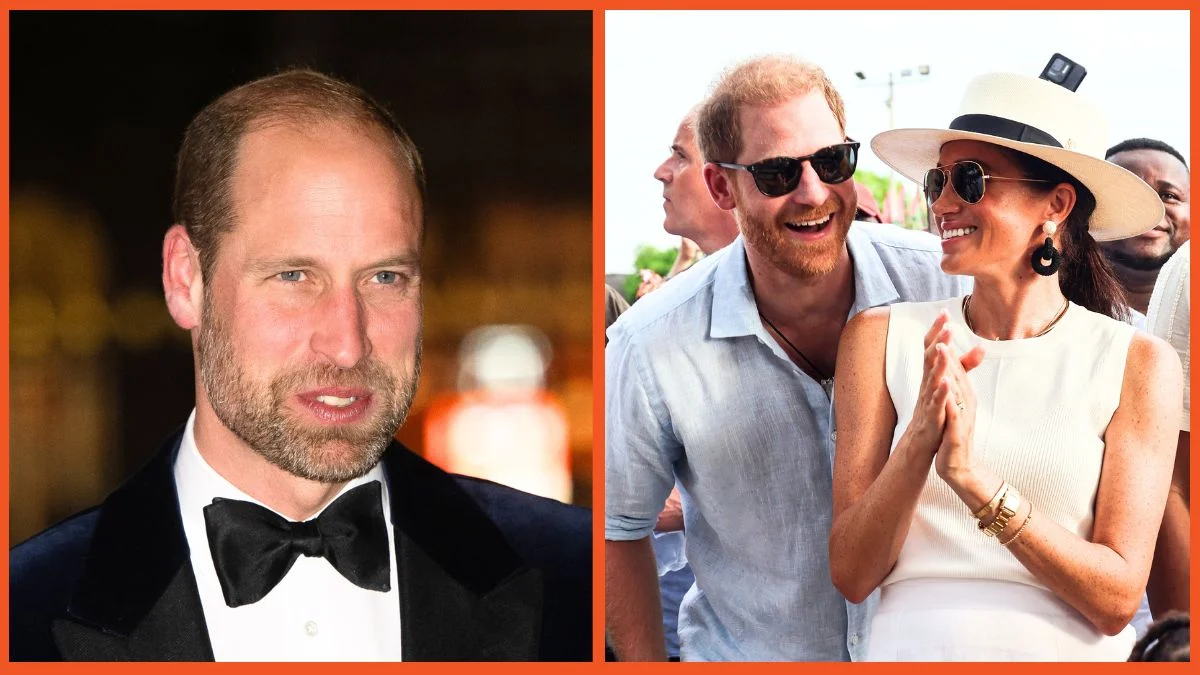
As Prince William continues to obstruct Prince Harry’s return to royal duties, the Duke and Duchess of Sussex have opted for a controversial strategy to assert their presence and pursue their goals.
The relationship between Harry and the royal family has been fraught since his departure from official duties in 2020. Although there have been occasional attempts at reconciliation, William remains steadfast in his opposition to Harry’s reinstatement. This enduring tension has driven Harry and Meghan to carve out a new path away from royal expectations.
Harry and Meghan’s latest venture brings them closer to home than they’ve been since their 2020 exit from royal life. They recently purchased a home in the upscale CostaTerra Golf and Ocean Club in Portugal, following their eviction from Frogmore Cottage in the UK. This move allows them to maintain a presence in Europe while steering clear of the ongoing familial strife.
Their acquisition not only adds to their portfolio of luxurious properties but also presents an opportunity for a “Golden Visa,” which would grant them visa-free access to the Schengen area. This could be particularly advantageous for Meghan, who dropped her bid for British citizenship upon leaving the UK. Their new home will facilitate easier travels across Europe while maintaining their main residence in Montecito, California.
Royal expert Angela Levin has suggested that this property purchase was influenced by the presence of Princess Eugenie and Jack Brooksbank in Portugal. Levin speculated that the Sussexes might be seeking a way to blend back into royal life and circulate among various European countries. She remarked, “Is that a way that she can go? They can go round various countries in Europe and pretend that they’re still royals again.”
However, the couple’s investment has not come without controversy. The CostaTerra development has faced significant backlash from local residents in Comporta, Portugal, as it transforms a once-public coastline into a private enclave for the wealthy. The restrictions on access to public beaches, which were previously illegal in Portugal, have sparked outrage. New regulations now allow local councils to designate certain beaches as private, resulting in the closure of beloved natural spots in the Algarve region—areas cherished by the local community for generations.
The CostaTerra Golf and Ocean Club, owned by millionaire property tycoon Mike Meldman, spans a vast 722-acre beachfront area and will feature 300 homes, starting at an eye-watering £3.6 million each. The project has exacerbated the divide between affluent property owners and the local populace, drawing criticism for prioritizing private interests over community welfare.
By choosing to invest in this contentious development, Harry and Meghan have faced allegations of aligning with what critics label a “typical greed situation.” Many argue that this behavior does not align with the ideals of royalty, raising eyebrows about their commitment to serving the community. As some observers point out, this move may reflect a broader pattern in British history of colonization and land appropriation, suggesting that Harry is, in some ways, continuing a family tradition more than he might care to admit.
 Last updated