
Marjorie Taylor Greene switches on the space lasers to erase Indigenous People’s Day
 Last updated
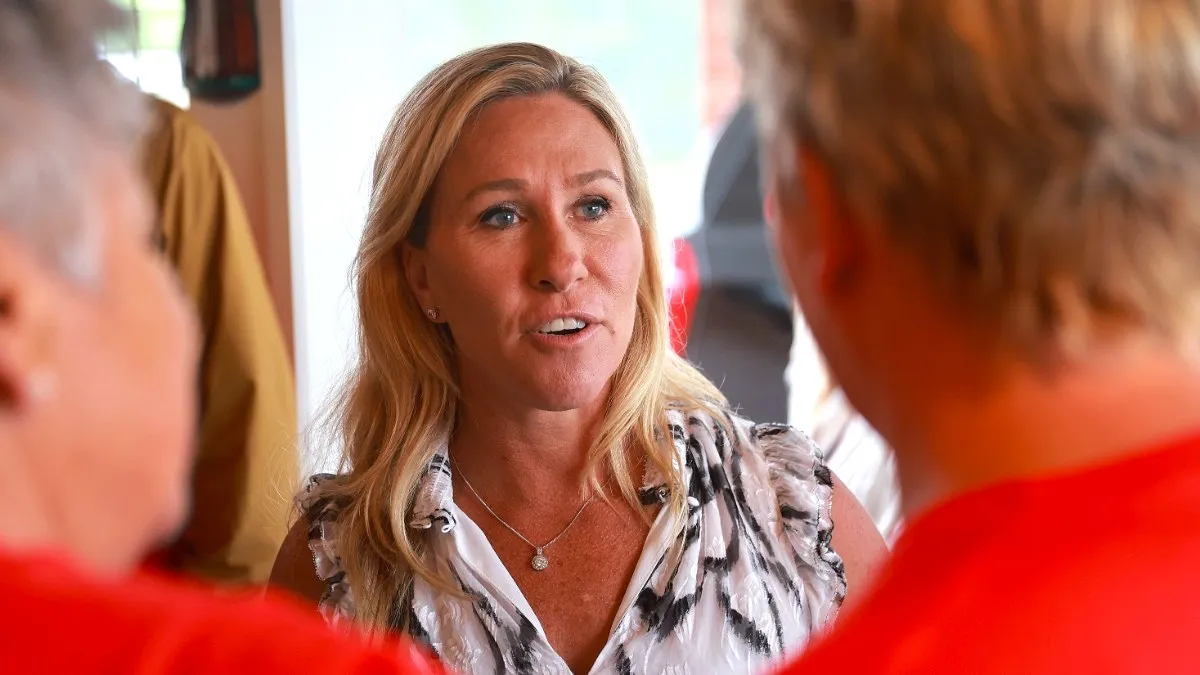
Marjorie Taylor Greene has once again sparked controversy with a recent social media post celebrating Columbus Day, completely sidelining Indigenous People’s Day, which is gaining recognition across the country. On October 14, Greene shared her views on X (formerly Twitter), stating, “Christopher Columbus paved the way for the American spirit of exploration and freedom,” and tagged it with a “Happy Columbus Day!!” accompanied by a graphic and her name’s seal.
Greene’s endorsement of Columbus is particularly striking amid a growing movement to acknowledge the impact of colonialism and honor Indigenous peoples, whose history and culture predate Columbus’ arrival by centuries. Critics quickly condemned Greene’s post, emphasizing the need to remember the atrocities linked to Columbus, including violence against Native Americans and the cultural erasure that followed European colonization.
Responses flooded in from users who highlighted the historical inaccuracies in Greene’s statement. One commenter simply celebrated Indigenous People’s Day, while another pointedly asked how Republicans could support Greene, suggesting her views are an embarrassment. Other users reminded her that Columbus “didn’t discover anything,” asserting that Indigenous peoples are “the original Americans” and everyone else is an immigrant.
Critics were quick to underscore that history often glosses over the effects of colonization, and several pointed out that Indigenous peoples had thriving societies long before Columbus arrived. One user bluntly referred to Greene as a “dumb ass” for suggesting otherwise, stating, “He didn’t find anything that wasn’t lost.” The sentiment expressed in these responses reflects a broader cultural shift away from traditional narratives about Columbus and toward a more nuanced understanding of history.
In contrast to Greene’s celebration, President Joe Biden acknowledged Indigenous People’s Day at the federal level, recognizing it as a time to honor the resilience and strength of Indigenous peoples. Over the past few years, approximately 216 cities have renamed Columbus Day in favor of Indigenous People’s Day, marking a significant cultural shift that Greene appears to overlook.
Greene’s views on Columbus and Indigenous history are consistent with her overall controversial political stance. Known for her outlandish conspiracy theories—including claims about Jewish space lasers and weather control—her remarks about Columbus are in line with her tendency to promote narratives that resonate with a specific far-right audience, often at the expense of historical accuracy and inclusivity.
In summary, while Greene celebrates Columbus Day, the public reaction reflects a growing awareness and rejection of such outdated perspectives, advocating for a more inclusive and honest acknowledgment of America’s history, including the contributions and suffering of Indigenous peoples.